
Industrial and Food Ingredients
Cassava StarchFrom Nigeria
Source Nigerian native cassava starch for food manufacturers, paper producers, textile processors, adhesive manufacturers and other industrial buyers. Abmia supports sourcing enquiries, product specifications, supplier coordination and export arrangements.
Country of origin
Nigeria
Botanical source
Manihot esculenta
Supply enquiries
Bulk Orders Welcome
Botanical source
Manihot esculenta
Indicative benchmark range
₦472k – ₦1.079m
Per metric tonne
Reference midpoint
₦775,500
Per metric tonne
Approximate USD reference
US$575
At illustrative ₦1,349.07/US$
Pricing is based on Africa-wide bulk native cassava starch benchmark estimates of approximately US$350–US$800 per tonne, converted at approximately ₦1,349.07/US$. This is a regional benchmark, not a verified Nigerian supplier quotation. Food-grade, industrial-grade and certified products may have different prices. Confirm the exact specification, supplier offer and Incoterms.
Product overview
Nigerian Native Cassava Starch for Global Industries
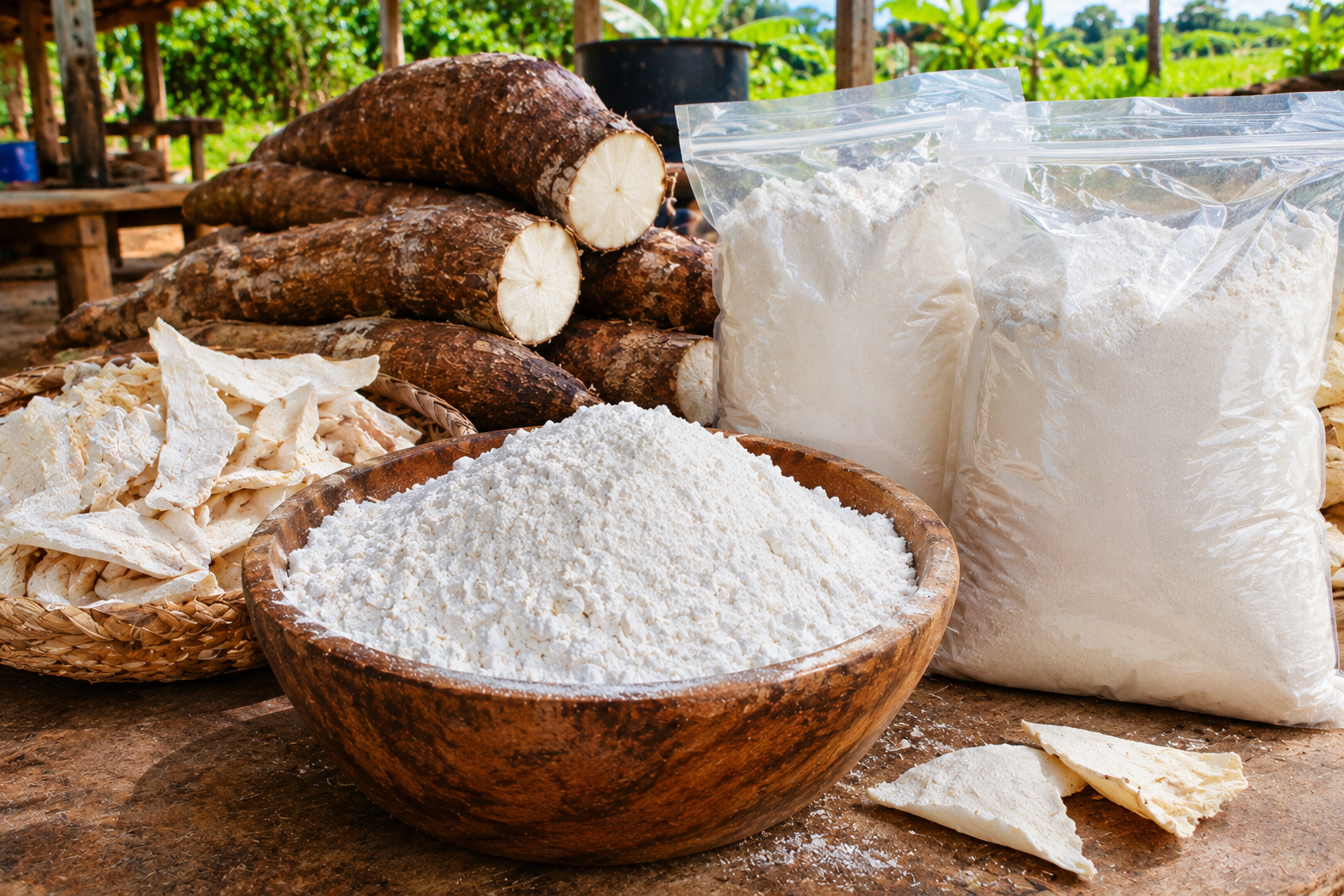
Cassava starch is a carbohydrate extracted from cassava roots, scientifically known as Manihot esculenta. It is widely used as a functional ingredient and raw material in food manufacturing and several non-food industrial processes.
Native cassava starch is valued for its functional properties in applications involving thickening, binding, adhesion and other processing requirements. Its suitability depends on technical characteristics such as viscosity, moisture, whiteness, purity and other buyer-defined parameters.
Abmia supports sourcing enquiries for Nigerian cassava starch intended for food and industrial markets. Buyers can submit their required grade, quantity, technical specification and destination for a sourcing assessment.
Agricultural Origin
Extracted from cassava roots.
Multiple Industries
Food and non-food processing applications.
Grade-specific quality requirements
Food-grade and industrial-grade starch are not interchangeable. The required quality parameters, microbiological limits and regulatory documentation should be agreed before sourcing.
Commercial product grades
Cassava Starch for Different Industrial Requirements
Different buyers require different starch characteristics. Specify your intended use and technical requirements to identify the appropriate product grade.
Food-Grade Native Cassava Starch
Native cassava starch intended for food processing and ingredient applications where the product meets the buyer's food safety and quality requirements.
Potential applications
Industrial-Grade Cassava Starch
Native cassava starch for selected non-food manufacturing applications. Specifications are determined by the processing requirements of the industrial buyer.
Potential applications
Buyer-Specified Native Starch
Cassava starch assessed against specific technical parameters supplied by the buyer, including viscosity, whiteness, moisture and other performance requirements.
Potential applications
Important: These are commercial requirement categories, not confirmation that every grade is currently available from a specific supplier. Food-grade, industrial-grade and specially certified starch should be quoted and assessed separately.
Quality assurance
Cassava Starch Specifications and Quality Checks
Buyers should provide the required technical parameters before procurement. Quality requirements vary depending on the intended application and whether the starch is for food or industrial use.
Moisture content
Check moisture levels against the agreed specification to support storage stability and reduce the risk of product deterioration.
Starch content and purity
Assess starch concentration and purity according to the buyer's intended processing application.
Whiteness and appearance
Evaluate colour, visual uniformity and the presence of unwanted particles or discolouration.
Viscosity and pasting properties
Assess viscosity and relevant pasting characteristics where they are important to the buyer's manufacturing process.
pH and ash content
Check pH and ash against the agreed technical limits and intended use.
Microbiological quality
Arrange microbiological testing where required, particularly for food-grade applications and destination-market compliance.
Contaminants
Assess applicable chemical, physical and other contaminants according to the buyer's product specification.
Have a cassava starch technical specification?
Send your moisture limit, viscosity requirements, whiteness, pH, ash content, microbiological criteria and intended application.
Industrial and food applications
Industries That Purchase Cassava Starch
Cassava starch is used in several manufacturing sectors. The grade and functional characteristics required depend on the buyer's production process.
Food manufacturing
Used as a functional ingredient in selected food products and manufacturing processes, subject to food-grade compliance.
Paper and packaging
Used in paper production, coating, surface treatment and other paper-related industrial processes.
Textile manufacturing
Used in selected textile processes, including applications where starch is required for fabric treatment.
Adhesive production
Used as a raw material in selected starch-based adhesive and bonding formulations.
Pharmaceutical and related processing
May be used in selected pharmaceutical excipient applications when the required grade and regulatory specifications are met.
Industrial ingredient distribution
Suitable for ingredient distributors, industrial processors and bulk raw-material buyers.
Export preparation
Cassava Starch Packaging, Handling and Shipment
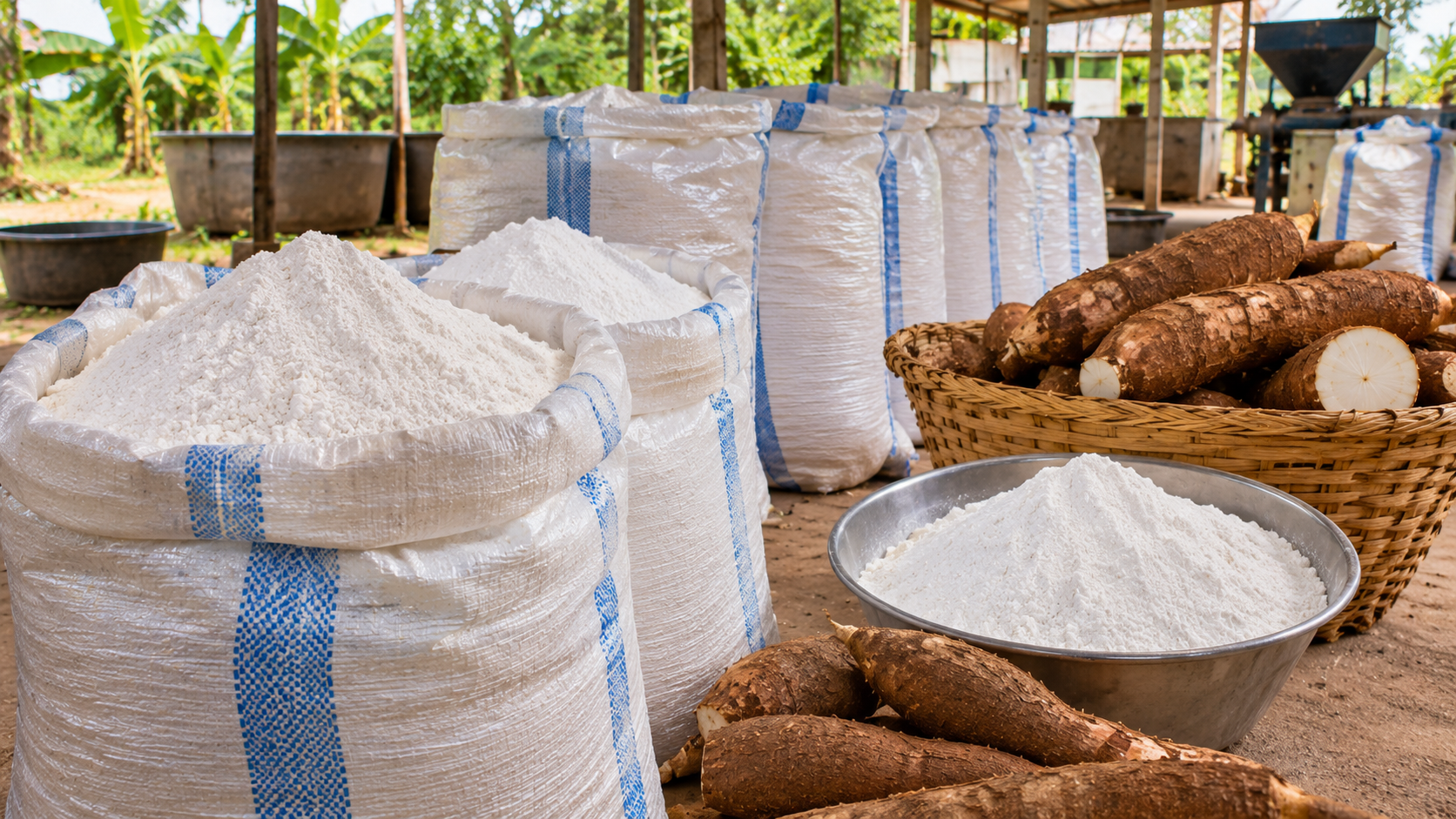
Cassava starch is moisture-sensitive and requires suitable packaging, storage and handling throughout the supply chain. Export preparation should protect the product against moisture ingress, contamination and physical damage.
Moisture-resistant packaging
Suitable lined bags, sealed sacks or buyer-approved bulk packaging to protect the starch during handling and transportation.
Storage and contamination protection
Store in dry, clean conditions and protect against moisture, pests, odours and foreign materials.
Inland transportation
Coordinate collection, consolidation, handling and movement to the designated export location.
International shipment
Coordinate export handling and shipping arrangements according to the agreed delivery terms.
International Buyer Coordination
Whether you require food-grade or industrial-grade native cassava starch, provide your target volume, technical specification, packaging requirements, destination port and preferred Incoterm for a sourcing assessment.
Discuss Shipment RequirementsRegional market benchmark
Cassava Starch Price in Nigeria
The indicative benchmark below provides a regional reference for bulk native cassava starch. It is intended as a preliminary guide for buyers rather than a confirmed Nigerian supplier offer.
Indicative benchmark per metric tonne
Minimum reference
₦472,000
Maximum reference
₦1,079,000
Indicative reference midpoint
₦775,500
Per metric tonne
Approximately US$575 per tonne at an illustrative ₦1,349.07/US$ rate.
Based on Africa-wide bulk native cassava starch benchmark estimates of approximately US$350–US$800 per tonne. This is not a verified Nigerian supplier quotation. Actual offers depend on grade, certification, quality, quantity, packaging, supplier availability and Incoterms.
Factors That Influence Cassava Starch Pricing
Commercial pricing can vary depending on starch quality, production processes, certification and buyer requirements.
Food-grade or industrial-grade classification
Starch purity and moisture content
Whiteness, viscosity and pasting properties
Microbiological and contaminant testing
Certification and quality documentation
Order quantity and supplier production capacity
Packaging, port and delivery terms
Request a current cassava starch quotation
Tell us whether you need food-grade or industrial-grade starch, together with your quantity, technical specification and destination.
Request PricingExport compliance
Cassava Starch Export Documentation
Export documentation depends on the product grade, destination-country requirements, customs classification and buyer specifications. Food-grade products may require additional documentation compared with industrial-grade consignments.
Commercial invoice
Packing list
Certificate of origin, where required
Product specification sheet
Certificate of analysis or laboratory report, where agreed
Relevant food safety documentation for food-grade products
Export customs declarations
Bill of lading or other transport document
This is a general checklist, not a definitive regulatory list. Applicable Nigerian export and destination-country requirements must be confirmed before shipment.
Our Cassava Starch Sourcing Process
Abmia coordinates sourcing enquiries through a structured process designed to align product specifications, supplier availability and export requirements.
Submit your enquiry
Specify food-grade or industrial-grade requirements, quantity and destination.
Sourcing assessment
Assess supplier availability and processing capability against your requirements.
Quotation and confirmation
Review pricing, quality parameters, packaging and delivery terms.
Quality and inspection
Agree sampling, laboratory testing and inspection requirements where applicable.
Export coordination
Coordinate packaging, documentation and shipment arrangements.
International buyer enquiries
Looking to Source Cassava Starch from Nigeria?
Whether you are a food manufacturer, paper producer, textile processor, adhesive manufacturer or industrial ingredient distributor, Abmia welcomes enquiries for Nigerian cassava starch. Share your grade, quantity, technical requirements and destination market to begin a sourcing assessment.
Frequently asked questions
Cassava Starch Sourcing FAQs
Common questions from buyers interested in sourcing Nigerian cassava starch.
What is cassava starch?+
Cassava starch is a carbohydrate extracted from cassava roots. It is used as a functional ingredient and industrial raw material in food manufacturing, paper, textiles, adhesives and other applications.
What is the botanical name of cassava?+
The botanical name of cassava is Manihot esculenta.
What is native cassava starch?+
Native cassava starch is starch extracted from cassava without chemical modification. It is supplied for applications where its natural functional properties meet the buyer's processing requirements.
What is the indicative price of cassava starch in Nigeria?+
The indicative regional benchmark range presented on this page is ₦472,000–₦1,079,000 per metric tonne, with a reference midpoint of ₦775,500/MT. It is based on Africa-wide benchmark estimates and is not a verified Nigerian supplier quotation.
What is the difference between food-grade and industrial-grade cassava starch?+
Food-grade starch must meet applicable food safety and microbiological requirements for its intended application. Industrial-grade starch is assessed against the technical and performance requirements of non-food manufacturing. The grades should not be treated as interchangeable.
What specifications should buyers provide?+
Buyers should provide intended use, moisture limit, starch content, whiteness, viscosity, pH, ash content, microbiological criteria and any other required technical parameters.
How is cassava starch packaged for export?+
Moisture-resistant lined bags or other buyer-approved bulk packaging may be used. Packaging should protect the starch against moisture, contamination and handling damage.
Can Abmia coordinate bulk cassava starch sourcing?+
Bulk enquiries are welcome. Buyers should provide their required grade, quantity, technical specification, packaging and destination for a sourcing assessment.
Does the displayed price include shipping?+
No. The displayed figures are indicative commodity benchmarks. Freight, insurance, handling, inspection, export charges and destination costs must be assessed separately according to the agreed Incoterm.
Abmia Nigerian Sourcing Network
Your Cassava Starch Sourcing Partner in Nigeria
Connect with Abmia to discuss native cassava starch sourcing, food-grade and industrial-grade requirements, commercial quantities, indicative prices and export arrangements from Nigeria.