
01
Fermentation
Fermentation should be assessed through the buyer's required cut-test results, including the proportion of well-fermented, partly fermented and slaty beans.
Cocoa & Agricultural Commodities
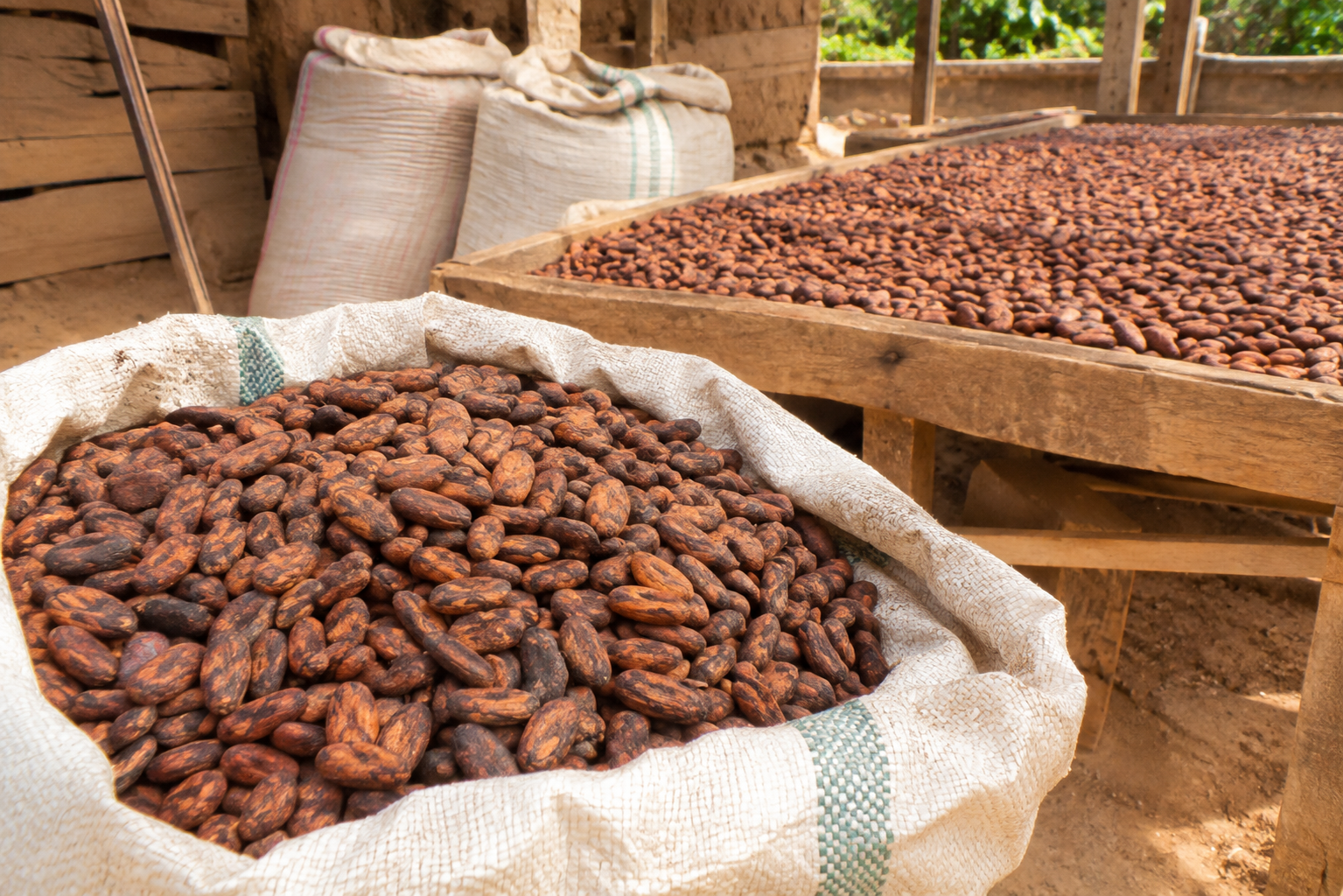
Source fermented and dried cocoa beans from Nigeria through Abmia. We help connect international buyers, cocoa processors and food manufacturers with Nigerian agricultural supply opportunities.
Product origin
Nigeria
Product form
Fermented & dried
Supply enquiries
Bulk quantities

Nigerian Cocoa
Agricultural sourcing
Cocoa Supply
Sourcing enquiries for processors, manufacturers and international commodity buyers.
Indicative minimum price
₦7,250,000
Per metric tonne
Indicative reference price
₦7,375,000
Per metric tonne
Indicative maximum price
₦7,500,000
Per metric tonne
Product overview
Cocoa beans are an important agricultural commodity used in the production of chocolate, cocoa powder, cocoa liquor and cocoa butter. Nigeria has an established cocoa-growing and trading sector, creating sourcing opportunities for local and international buyers.
Abmia provides a sourcing channel for buyers seeking fermented and dried Nigerian cocoa beans. Product acceptance should be based on agreed quality parameters, representative samples, inspection results and the requirements of the intended processing facility or destination market.
Whether you are a cocoa processor, chocolate manufacturer, ingredient distributor or bulk commodity buyer, your sourcing enquiry can be assessed against quantity, grade, packaging and delivery requirements.
Product identification
Commodity details
Buyer requirements
Cocoa quality is not determined by appearance alone. Buyers should define acceptable fermentation, moisture, bean count, defects and food-safety parameters before the commercial lot is approved.
Fermentation should be assessed through the buyer's required cut-test results, including the proportion of well-fermented, partly fermented and slaty beans.
Moisture must meet the agreed buyer and destination-market requirements. Excess moisture can increase mould risk during storage and transit.
Bean count and size should be measured and reported according to the buyer's purchasing specification.
Beans should be checked for stones, sticks, shell fragments and other foreign materials before final packing.
Assess mouldy, insect-damaged, germinated, flat and otherwise defective beans against the agreed acceptance limits.
Testing and documentation may include pesticide residues, heavy metals, microbiological risks and other destination-specific requirements.
Agree the quality specification before shipment
Exact acceptance limits should be written into the purchase agreement. Request a representative sample and independent inspection where appropriate. Do not assume that all cocoa beans meet the same grade or destination-market requirements.
Market applications
Fermented and dried cocoa beans are used by different segments of the international cocoa value chain. The final buyer specification depends on the intended processing application.
International buyers can submit their target quantity, specifications, destination port and preferred delivery terms. This allows the sourcing enquiry to be evaluated against available supply and shipment requirements.
Packaging and handling
Proper post-harvest handling, drying, storage and packaging are important to preserve cocoa quality. Export preparation should be planned around the buyer's specification and the conditions expected during transportation.
Use clean, suitable bags or other agreed packaging that protects the beans from contamination and handling damage.
Store dried cocoa beans in dry, ventilated conditions and protect packed cargo from rain, condensation and water exposure.
Maintain clear lot references, product descriptions, weights and inspection records for traceability.
Shipment arrangements should be based on confirmed cargo availability, inspection results, packing details and the destination buyer's requirements.
Inland transportation
Coordinate movement from the sourcing or storage location to the designated export facility.
Cargo inspection
Confirm weights, packaging, lot quality and required inspection documentation.
Export shipment
Agree the port, freight arrangement, shipping schedule and applicable Incoterm with the buyer.
Destination delivery
Confirm destination requirements, import clearance responsibilities and delivery arrangements.
Nigerian market reference
The following figures provide an indicative November 2026 Nigerian dry-bean spot reference. They are not a fixed export offer or a guaranteed supplier quotation.
Final commercial pricing should be confirmed against the available lot, quality results, location, order size and agreed delivery terms.
Dried cocoa beans · per metric tonne
Minimum reference
₦7.25m
Maximum reference
₦7.50m
Indicative export reference price
₦7,375,000
Per metric tonne
Approx. US$5,463 at an illustrative ₦1,350/US$ exchange rate.
November 2026 Nigerian dry-bean spot reference. The USD conversion is illustrative and does not represent a live exchange quotation. Freight, insurance, inspection, export handling and destination charges are not included.
Request Current Cocoa PriceExport readiness
Export documentation depends on the product, transaction, applicable Nigerian export procedures and the importing country's regulations. The following documents may be required depending on the shipment.
Important documentation note
This is a planning checklist, not a declaration that every document is mandatory for every shipment. Confirm applicable requirements with the relevant Nigerian authorities, inspection bodies, customs agents and destination-country importer before dispatch.
How it works
Share your requirements and allow the sourcing process to be evaluated against available supply, quality expectations and shipment arrangements.
01
Tell us your required quantity, destination and intended use.
02
Agree fermentation, moisture, bean count and defect limits.
03
Assess sourcing options, quantity and indicative pricing.
04
Review samples, test results and commercial lot details.
05
Agree packaging, documentation, Incoterms and logistics.
Frequently asked questions
Abmia provides a Nigerian sourcing channel for buyers interested in cocoa beans. Availability, origin, quantity, specifications and shipment arrangements are confirmed during each sourcing enquiry.
The product offering is fermented and dried cocoa beans. Buyers should confirm the fermentation profile, moisture level and cut-test results required before placing an order.
The indicative reference price displayed on this page is ₦7,375,000 per metric tonne, within a stated range of ₦7,250,000 to ₦7,500,000. This is a November 2026 reference, not a guaranteed supplier quotation.
Bulk enquiries are welcome. Buyers should provide their required quantity, quality specifications, packaging preference, destination and preferred delivery terms so that supply can be assessed.
Sample availability can be discussed during the sourcing process. The sample should represent the proposed commercial lot as closely as possible, with agreed inspection and testing procedures.
Packaging should be agreed according to buyer requirements and shipment conditions. Export packaging must protect the beans from moisture, contamination and physical damage during handling and transit.
No. The displayed amount is an indicative Nigerian dry-bean price reference. Freight, insurance, export handling, inspection, documentation and other charges depend on the agreed Incoterm and destination.
Nigerian Cocoa Sourcing
Send Abmia your target quantity, quality requirements, packaging preference and destination. We can assess your sourcing enquiry and discuss the next steps.